 By
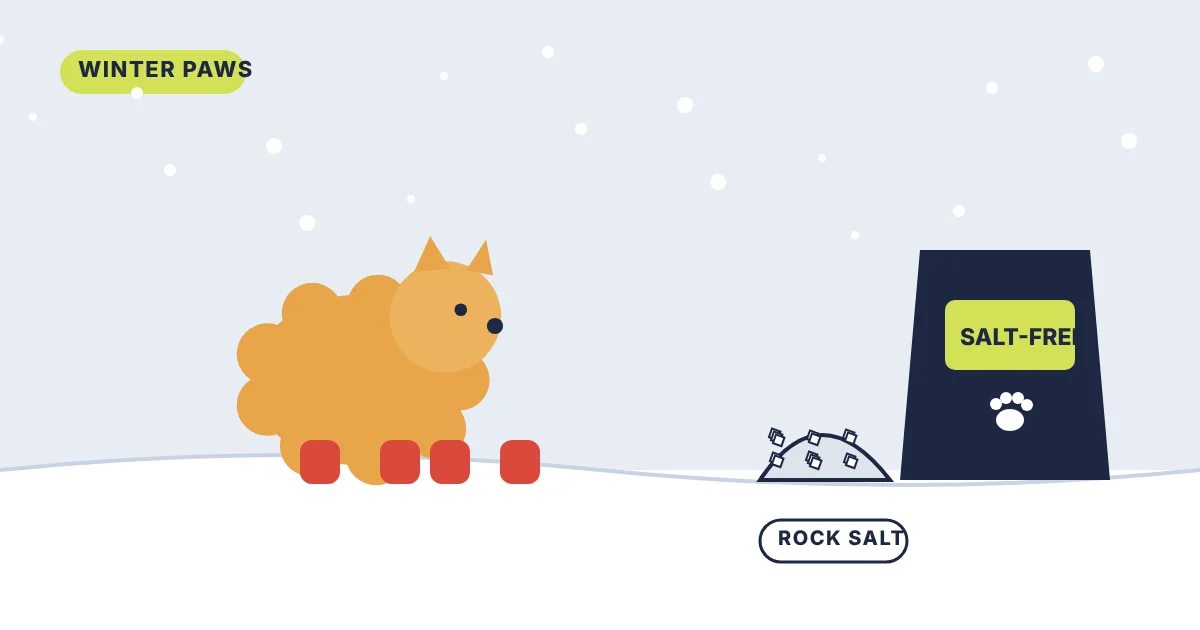
Short answer: for your own steps and walkway, choose a salt-free ice melt such as one based on calcium magnesium acetate or an amide formula, use as little as works, and sweep up leftovers. Avoid plain rock salt and calcium chloride where pets walk. You can’t control the sidewalk, so protect paws instead: booties or paw wax before the walk, then wash and dry paws afterward. “Pet safe” on a bag is a marketing term, not a guarantee that a dog can eat it.
A note from Helen: Teya is a tiny Pomeranian, so her paws and belly are right down where the salt and slush are, and Tim is a cat who sometimes walks across our doormat after the rest of us have tracked things in. This guide isn’t a test of ice melts: the safety points come from the ASPCA and veterinary sources, the product details from each listing, and the complaints from Amazon’s summaries of owner reviews.
Common ice melts compared
| Ingredient | Paws and skin | If licked or eaten | Notes |
|---|---|---|---|
| Sodium chloride (rock salt) | Drying, stings cracked pads | Upset stomach; large amounts can raise sodium dangerously | Cheapest and most common on public sidewalks |
| Calcium chloride | Most irritating; gives off heat as it dissolves | Can irritate mouth and stomach | Works in the coldest weather, hardest on paws |
| Magnesium chloride | Milder than calcium chloride | Upset stomach in larger amounts | Often sold as “pet friendlier” |
| Potassium chloride | Mild to moderate | Upset stomach in larger amounts | Slower in deep cold |
| Calcium magnesium acetate (CMA) | Gentle | Low risk in small amounts | Salt-free; slower and pricier |
| Urea / amide formulas | Gentle | Low risk in small amounts | Common in salt-free “pet safe” products |
General guidance only: any ice melt can upset a pet’s stomach if eaten. Your vet knows your pet’s health and is the right person to ask about a specific product.
Ingredient checker
Check the bag before you buy
Pick the first ingredient on the label and where you’ll use it. Nothing you choose leaves your browser.
What “pet safe” on the bag means
On ice melt, “pet safe” or “pet friendly” isn’t backed by an official test. Usually it means the product is salt-free or chloride-free, so it’s less likely to sting paw pads than rock salt. It doesn’t mean a dog can eat it, and owner reviews of these products are split on whether they melt ice as well as salt in deep cold. Three things to check on the label:
- The ingredient list, not the paw print on the front.
- The lowest working temperature. Gentle formulas often stop working at higher temperatures than calcium chloride.
- Coverage per pound, so you don’t over-apply. More ice melt doesn’t mean faster melting, just more residue on paws.
The winter paw routine
The ASPCA gives the same advice: wash and dry your pet’s feet and belly after walks and use pet-friendly ice melt at home. Not sure your dog needs boots? Our dog boots size guide shows how to measure, and this temperature chart tells you when to keep walks short.
If your pet ate ice melt
Call your vet or the ASPCA Animal Poison Control Center at (888) 426-4435 if your pet ate a mouthful from the bag, keeps vomiting, seems wobbly or weak, or is drinking far more than usual. Have the bag with you so you can read out the ingredients. A few licks from a salty paw usually cause no more than drooling or a single vomit, but small dogs and cats get into trouble with smaller amounts.
Picks
Affiliate note: some links in this guide go to Amazon. As an Amazon Associate we earn from qualifying purchases, at no extra cost to you. Teya and Tim haven’t used these products: picks are based on ingredients, specs and owner reviews.
For your own steps: Safe Paw Pet Safe Ice Melt
A salt-free, chloride-free granular ice melt made with calcium magnesium acetate and a crystalline amide core, with grit added for traction. The maker lists melting down to −2°F and about 100 square feet per pound.
- Owners like that it’s gentle and pet friendly.
- Melting is the split: some say it clears ice in half an hour, others say it barely works.
- Mixed reports on whether it’s gentle on concrete and grass, and on value.
Skip it if you need to clear thick ice fast in deep cold; use a shovel first and the melt as a finisher.
Check it on AmazonFor sidewalks you can’t control: Musher’s Secret Paw Wax
A dense, natural wax developed for sled dogs. You rub a thin layer on the pads before a walk; it works like a light barrier against salt and ice. The small 60-gram tin lasts a long time on a small dog.
- Owners say it’s easy to apply, goes a long way and keeps pads soft in winter.
- Some dogs lick it off, and some owners say it doesn’t stay on long.
Skip it if your dog already has cracked or bleeding pads: see your vet first.
Check it on AmazonFrequently asked questions
Is rock salt bad for dogs’ paws?
It can be. Rock salt (sodium chloride) dries and irritates paw pads, especially if they are already cracked, and dogs that lick salty paws or eat salted snow can get an upset stomach. Large amounts can cause dangerously high sodium levels. Wipe paws after every winter walk.
What ice melt is safest for pets?
Products based on calcium magnesium acetate (CMA), urea or a salt-free amide formula are generally gentler on paws than rock salt or calcium chloride. No ice melt is meant to be eaten, so store bags out of reach and sweep up leftovers.
Does “pet safe” on the label mean my dog can eat it?
No. There’s no official standard behind “pet safe” on ice melt. It usually means the product is less irritating than rock salt. Any ice melt can upset a pet’s stomach if eaten.
What should I do if my dog ate ice melt?
A lick or two usually causes at most mild drooling or vomiting. If your dog ate a mouthful from the bag, or is vomiting repeatedly, wobbly or very thirsty, call your veterinarian or the ASPCA Animal Poison Control Center at (888) 426-4435.
Do dogs need booties or paw wax in winter?
Not all dogs, but they help on salted sidewalks. Booties cover the whole paw; paw wax is a thin barrier that many dogs tolerate better. Either way, wash and dry the paws when you get home.