 By
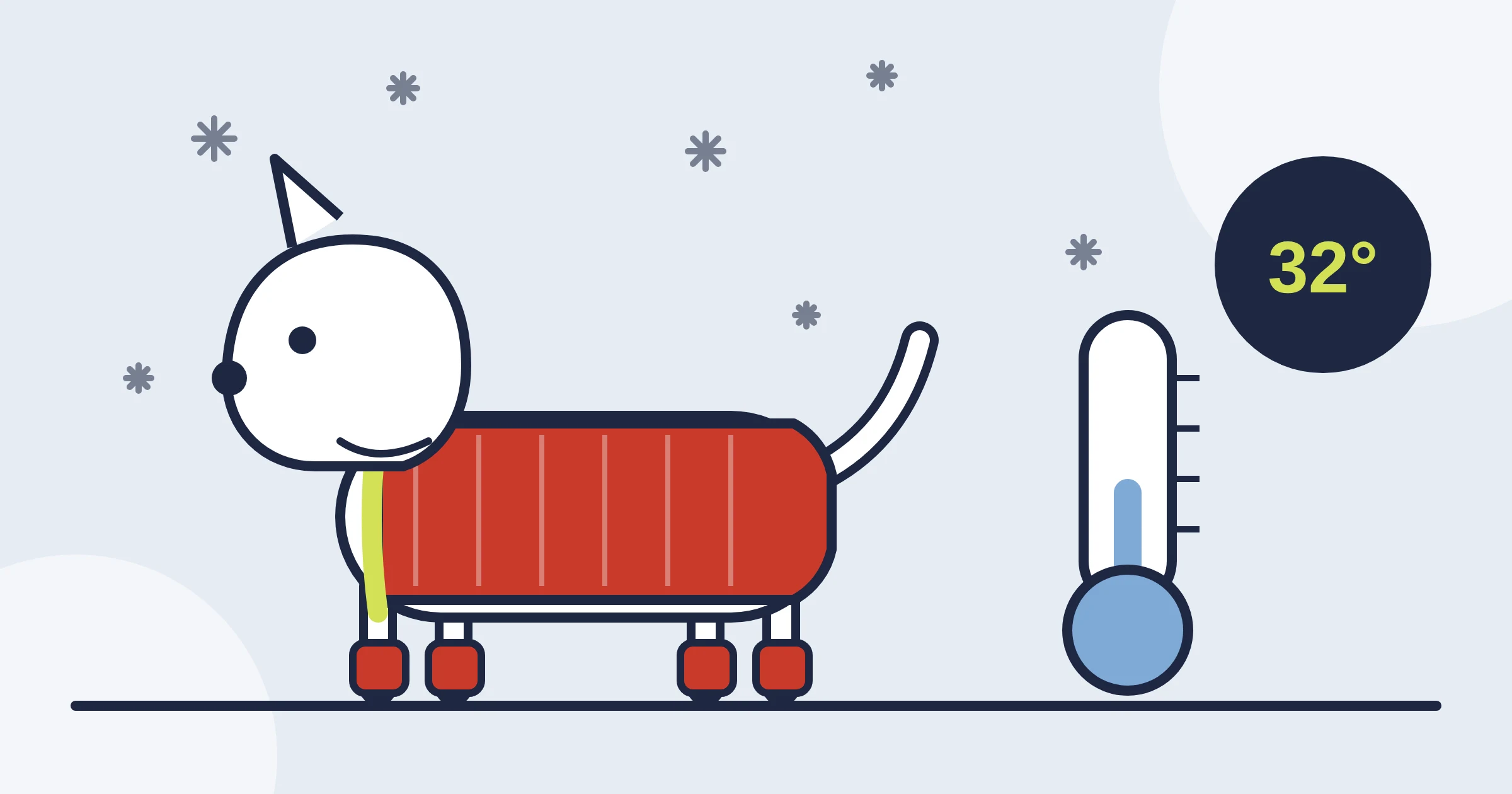
Short answer: most healthy dogs are comfortable above 45°F. Below 45°F, small, thin-coated, young, old and sick dogs start to feel the chill. Below 32°F most dogs are at risk of hypothermia and frostbite, so keep walks short. Below 20°F even cold-tolerant breeds need close watching and brief outings. Go by the “feels like” temperature: wind and wet fur make cold much harder on a dog.
Call your vet now if your dog is shivering hard or has stopped shivering, seems confused, sluggish or stiff, or has pale, gray or bluish skin on the ears, tail or paw pads. Those are signs of hypothermia or frostbite.
The dog walking temperature chart
The temperatures in this chart come from veterinarian Jennifer Coates’ guidance for Chewy: at 45°F vulnerable dogs can feel uncomfortably chilled, at 32°F most dogs begin to be at risk of cold-related problems, and at 20°F even the most cold-tolerant dogs should be closely monitored. We grouped dogs by how well they handle cold and turned each band into a plain walking plan. The walk lengths are our cautious reading of that guidance, not a rule from a single source.
| Dog (dry day, no coat) | 45°F and up | 32–44°F | 20–31°F | 0–19°F | Below 0°F |
|---|---|---|---|---|---|
| More sensitive: toy or small, thin or short coat, puppy, senior or a health problem | Comfortable | Keep it shorter | Short walks only | Potty breaks only | Potty breaks only |
| Typical: medium or large, ordinary coat, healthy adult | Comfortable | Fine, keep an eye on them | Keep it shorter | Short walks only | Potty breaks only |
| Cold-tolerant: medium or large, thick double coat (husky, malamute, Bernese), healthy adult | Comfortable | Comfortable | Fine, keep an eye on them | Keep it shorter | Short walks only |
| Level | What to do |
|---|---|
| Comfortable | Your usual walk. |
| Fine, keep an eye on them | Your usual walk. Watch for shivering, slowing down or lifting paws, and head home if you see them. |
| Keep it shorter | About 15–30 minutes. Coat or sweater for small and thin-coated dogs; wipe paws when you get home. |
| Short walks only | About 10–15 minutes. Coat for most dogs, booties or paw balm, and a direct route home. |
| Potty breaks only | A few minutes for the bathroom, then back inside. Play and train indoors instead. |
On a wet day (rain, sleet or wet snow), read one column to the right: wet fur insulates poorly. Use the “feels like” or wind chill temperature from your weather app, not the plain air temperature.
Walk-safety calculator
Is it too cold for a walk today?
Enter today’s “feels like” temperature and a few details about your dog. Nothing you type leaves your browser.
The calculator applies the chart above. A coat or sweater moves a thin-coated dog into the “typical” row; it does not make any dog safe in extreme cold.
What changes your dog’s limit
- Size and body fat. Small dogs lose heat faster because they have more skin surface for their weight, and body fat helps insulate.
- Coat. A dense undercoat is what keeps a dog warm. Long hair alone does not.
- Age and health. Very young, very old and sick dogs control their body temperature less well. Ask your vet about arthritis, heart disease, diabetes or thyroid problems in winter.
- Wind and wet. Wind strips heat through the coat, and wet fur loses most of its insulation.
- Sun and movement. A sunny day feels warmer, and a dog that keeps moving makes its own heat. Standing still at the bus stop is colder than a brisk walk.
- What your dog is used to. Dogs that live in cold places and spend time outside handle cold better than a dog that just moved north.
The Tufts Animal Care and Condition weather scale, a screening tool used in animal-welfare work, adjusts its risk score the same way: up for toy dogs, puppies, elderly dogs and rain or sleet; down for northern or heavy-coated breeds, good shelter and dogs used to the cold.
Signs your dog is too cold
| Early signs: head home | Serious signs: call your vet |
|---|---|
| Shivering, whining, slowing down, tucked tail | Shivering that stops while the dog is still cold |
| Lifting paws or walking on three legs | Confusion, sluggishness, stiff or clumsy movement |
| Looking for shelter or trying to turn back | Pale, gray or bluish ears, tail tip or paw pads (possible frostbite) |
Washington State University’s veterinary college notes that frostbitten paw pads often turn gray and that affected dogs may walk as if prancing. Warm a cold dog gradually with blankets in a warm room and call your vet; do not rub frostbitten skin.
Winter walk tips
- Shorter, more often. Two or three short walks beat one long one on a bitter day. The AVMA advises shortening walks in very cold weather.
- Dress short-coated dogs. The AVMA suggests a sweater or coat for dogs with short coats or that seem bothered by the cold.
- Protect the paws. Booties keep out ice, salt and ice-melt chemicals; a wax paw balm is the next best thing for dogs that refuse boots.
- Wipe paws, legs and belly after every walk. Salt and de-icers irritate pads, and dogs that lick them off can get sick.
- Use pet-safe ice melt at home and clean up antifreeze spills right away.
- Stay off frozen ponds and lakes. Thin ice is a real risk for dogs and the people who go in after them.
- Bang on the hood before you start the car. Cats and small wildlife shelter in warm engines.
- Never leave your dog alone in a car in winter: a car cools down like a refrigerator.
Cold-weather gear we would buy
Affiliate note: some links in this guide go to Amazon. As an Amazon Associate we earn from qualifying purchases, at no extra cost to you. We choose products for fit, safety and specifications, not for the commission.
Shopping on Black Friday? Add it to your Amazon cart now so it is ready when deals start.
How we chose
- We started from the cold-weather guidance in this article (AVMA, WSU and veterinarian-written advice) and looked for gear that does those jobs: insulate a short coat, keep salt off paws, and keep ice melt pet-safe.
- We favored long-running, widely bought products with a large volume of owner feedback, and read the complaints as closely as the praise.
- We checked each listing on October 17, 2026 for U.S. availability.
- We have not tested these products with our own dogs. Picks are based on specifications, sizing instructions and owner feedback.
Coat: Kurgo Loft Dog Jacket
A quilted, reversible jacket with a water-resistant shell, reflective trim and an opening for a harness or leash attachment. Sizes run from extra small to extra large.
- Two looks in one, and it works with a harness underneath.
- Machine washable.
- Downside: It is a light, quilted layer, not a heavy parka; on very cold days add a sweater underneath or shorten the walk.
Skip it if you have a thick double-coated breed: most do not need a jacket.
Check it on AmazonBoots: Ruffwear Grip Trex Dog Boots
Rubber-soled boots with a breathable mesh upper and a hook-and-loop strap. Ruffwear sizes them by the width of your dog’s paw in inches.
- Keeps salt, ice-melt chemicals and ice balls off the pads.
- Grippy sole on icy sidewalks.
- Downside: Most dogs walk strangely at first; practice indoors for a few days with treats.
Skip it if your dog will not tolerate boots after a week of practice; use paw wax and wipe paws instead.
Check it on AmazonNo boots: Musher’s Secret Paw Wax
A long-selling wax-based paw balm you rub into the pads before a walk. It forms a thin barrier against salt, sand and ice.
- Quick to apply, no fitting.
- Also soothes dry, cracked pads.
- Downside: It is not a full barrier: still wipe paws after walks on salted sidewalks.
Skip it if your dog already wears boots happily.
Check it on AmazonAlso worth adding
- Pet-safe ice melt for your own steps: Safe Paw Ice Melter (8 lb jug), which the maker sells as salt- and chloride-free.
Before a cold-weather walk
Winter walk checklist
Your ticks are saved in this browser only.
Sources
- Chewy: How Cold Is Too Cold for Dogs? (Jennifer Coates, DVM; reviewed by Hannah Hart, DVM; updated October 13, 2025)
- AVMA: Cold weather pet safety
- Washington State University College of Veterinary Medicine: When is the cold too cold for your pet?
- Tufts Animal Care and Condition scales (Patronek), via the Oregon VMA
Frequently asked questions
What temperature is too cold to walk a dog?
There is no single number. A veterinarian-written guide from Chewy says vulnerable dogs can feel uncomfortably chilled at 45°F, most dogs begin to be at risk of cold-related problems at 32°F, and even cold-tolerant dogs should be closely watched at 20°F. Below 20°F, keep walks short for every dog; below 0°F, stick to quick bathroom breaks.
How long can a dog be outside in 20 degree weather?
For most dogs, keep it to a short walk of about 10 to 15 minutes, with a coat for small or short-coated dogs and booties or paw wax. Washington State University’s veterinary college recommends limiting exposure to freezing temperatures to about 10 to 15 minutes before getting to a warmer place.
Is 40 degrees too cold for a dog?
Not for most healthy dogs. At 40°F, small, thin-coated, young, old or sick dogs may feel chilled, so a sweater and a slightly shorter walk help. Large dogs with ordinary coats are usually comfortable.
Do dogs need coats in winter?
Short-coated, thin, small and senior dogs often do. The AVMA suggests a sweater or coat for dogs with short coats or that seem bothered by the cold. Thick double-coated breeds such as huskies and malamutes usually do not.
Are dog boots necessary?
Not always, but they help on salted sidewalks and ice. The AVMA suggests booties that fit well. If your dog will not wear them, use a wax paw balm and wipe the paws, legs and belly after every walk.
Can dogs get frostbite?
Yes. Ears, tail tips and paw pads are most at risk. Frostbitten skin may look pale, gray or bluish. Warm your dog gradually and call your veterinarian; do not rub the area.
Paws & Picks is a participant in the Amazon Services LLC Associates Program. As an Amazon Associate we earn from qualifying purchases. Product details can change; check the current listing before you buy.