 By
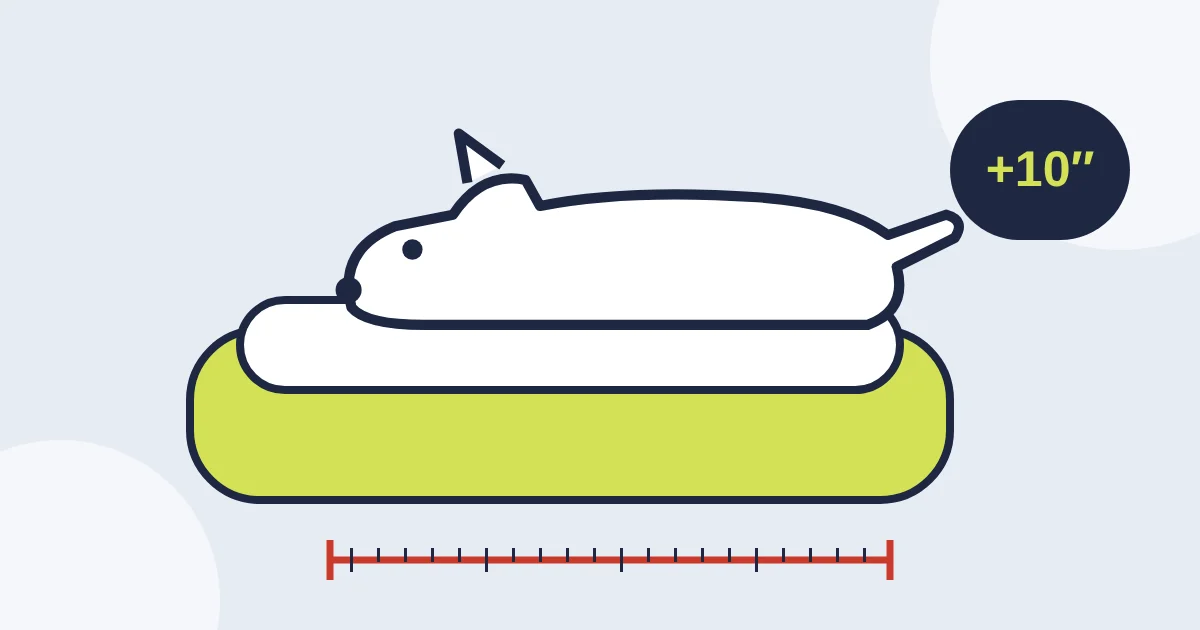
Short answer: measure your dog from the tip of the nose to the base of the tail. For a dog that sleeps stretched out, get a bed about 8 to 12 inches longer than that. For a curler, a round bed whose inside diameter is about that length. For a dog that leans on the sides, a bolster bed whose inside area is a few inches longer. If you are between sizes, go bigger.
Step 1: measure your dog (two minutes)
Wait until your dog is lying down in its usual sleeping position, then use a soft tape measure (or a piece of string and a ruler).
- Length: from the tip of the nose to the base of the tail. Do not include the tail.
- Width: across the widest part of the body. For most dogs that is the shoulders; for stocky dogs it may be the belly.
- Weight: from your last vet visit, or weigh yourself holding your dog and subtract your own weight. It matters for foam thickness.
- How they sleep: watch for a few nights. Stretched out on the side (sprawler), curled into a ball (curler), or pressed against something with the head resting on it (leaner)? Many dogs do all three.
Step 2: get the size
Dog bed size calculator
All measurements in inches and pounds. Nothing you type leaves your browser.
The extra inches are our rule of thumb, not an industry standard: enough room that the head and paws stay on the bed when the dog stretches. If your dog likes to sleep fully extended with legs straight out, use the top of the range.
Step 3: match the bed to how your dog sleeps
| Sleep style | What it looks like | Bed shape | Size from nose-to-tail length |
|---|---|---|---|
| Sprawler | On the side or belly, legs out | Rectangular mattress, pillow bed, low-sided bed | About 8–12″ longer |
| Curler | Curled in a ball, nose to tail | Round, donut or nest bed | Inside diameter about equal to the length |
| Leaner | Back pressed against something, head on a ledge | Bolster bed with raised sides | Inside area at least 4″ longer |
| Hot sleeper | Seeks cool floors, sleeps flat | Elevated cot bed or thin, breathable mat | About 8″ longer |
Chewy’s sizing guide describes the same three styles: sprawlers need larger, open beds; curlers suit almost any style; leaners do best with bolsters.
How thick should the bed be?
A bed can be the right length and still fail if the dog sinks through it. These are rules of thumb for the supportive foam layer (the cover and loose fill do not count):
- Under 30 lb: 2–3 inches is usually enough.
- 30 to 70 lb: about 3–4 inches.
- Over 70 lb, seniors and dogs with stiff joints: 4 inches or more of firm orthopedic or memory foam, with a low edge so it is easy to step onto.
The hand test: with your dog lying on the bed, slide your hand under the heaviest point (usually the hips). If you can feel the floor, the bed is too thin or too soft.
Dog beds that match each sleep style
Affiliate note: some links in this guide go to Amazon. As an Amazon Associate we earn from qualifying purchases, at no extra cost to you. We choose products for fit, safety and specifications, not for the commission.
Memory and egg-crate foam with bolsters on three sides.
Check on AmazonRaised rim for small dogs and cats that curl up.
Check on AmazonRaised mesh cot that lets air flow underneath.
Check on AmazonShopping on Black Friday? Add it to your Amazon cart now so it is ready when deals start.
How we chose
- We started from the sizing and safety guidance in this article and checked each product’s listed dimensions against it.
- We favored long-running, widely bought products with a large volume of owner feedback, and read the complaints as closely as the praise.
- We checked each listing on October 16, 2026 for stock and U.S. delivery.
- We have not tested these products with our own pets. Picks are based on specifications, instructions and owner feedback.
Best for large dogs and leaners: EHEYCIGA Orthopedic Dog Bed (Large)
A sofa-style bed with a memory-foam and egg-crate-foam base and bolsters on three sides for dogs that like to rest their head. One of the most widely bought orthopedic dog beds on Amazon.
- Supportive base for heavier and older dogs.
- Bolsters suit leaners; the open side makes it easy to step on.
- Downside: Check the inside sleeping area, not just the outside size; bolsters take up some of the 36 inches. Larger sizes are listed separately.
Skip it if your dog is over about 30 inches nose to tail; choose the XL version.
Check it on AmazonAlso great for leaners: Bedsure Orthopedic Bolster Bed (Large)
An egg-crate-foam bed with bolsters on four sides and a removable, water-resistant cover. A long-running best seller.
- Four-sided bolster for dogs that like to lean.
- Washable cover.
- Downside: Egg-crate foam is softer than solid memory foam; very heavy dogs may prefer the EHEYCIGA.
Skip it if your dog sprawls flat with its legs out; a flat mattress or cot fits that style better.
Check it on AmazonBest for curlers: Bedsure Calming Donut Bed (23-inch)
A round, fluffy bed with a raised rim that small dogs and cats can curl into. One of the most popular donut beds on Amazon.
- The rim supports the head and feels secure.
- Machine-washable (check the label).
- Downside: Too small for medium dogs; bigger sizes are sold separately.
Skip it if your dog sleeps stretched out or weighs more than a small breed.
Check it on AmazonAlso worth a look
- Hot sleepers: the Bedsure elevated cooling dog bed (49 × 35.4 inches, raised 8 inches, mesh) for large dogs that seek cool floors.
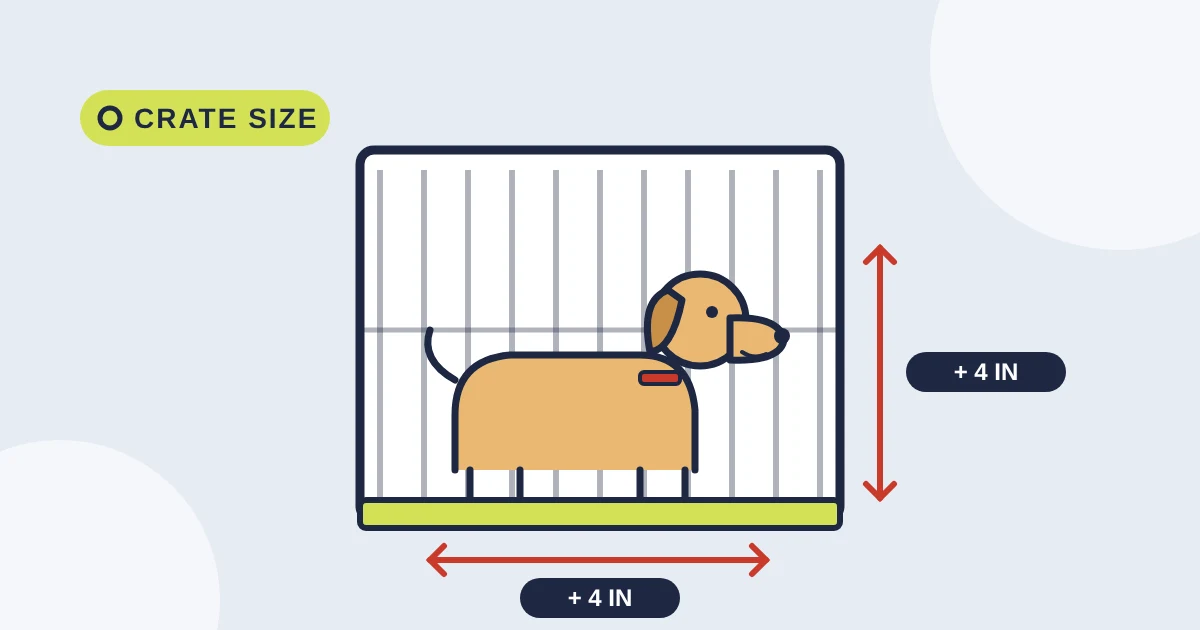
- Crates: the KSIIA washable crate pad (35 × 23 inches) fits a 36-inch crate; measure the crate floor first.
Size labels vs. real inches
“Large” can mean 36 inches at one brand and 44 at another, and many listings give the outside size including bolsters. Before you buy:
- Find the inside sleeping area in the product details or size chart. For bolster beds it can be 6 or more inches smaller than the outside.
- Check where the bed will go: measure the floor space, and for crates, the inside floor of the crate.
- Look for a removable, washable cover. You will wash it far more often than you expect.
Mistakes to avoid
- Buying by weight alone. A 60-lb Greyhound and a 60-lb Bulldog need very different beds. Length decides size; weight decides thickness.
- Measuring a puppy once. Size for the adult dog, or plan to replace the bed. A crate pad is a cheap stopgap.
- Ignoring the outside size. The bed still has to fit the corner you have in mind.
- Choosing a high bolster for a dog with stiff joints. A low entry is easier to step over.
Frequently asked questions
How do I measure my dog for a bed?
Measure from the tip of the nose to the base of the tail while your dog is lying in its usual sleeping position, then measure across the widest part of the body, usually the shoulders. Compare those numbers with the inside sleeping area of the bed, not the outside size.
Should a dog bed be bigger than the dog?
Yes. A dog that sleeps stretched out needs a bed several inches longer than its nose-to-tail length so the head and legs stay on the bed. Our rule of thumb is 8 to 12 inches longer. A dog that curls up can use a round bed whose inside diameter is about its nose-to-tail length.
What if my dog is between two sizes?
Choose the bigger bed. A bed that is slightly too big costs a little floor space; a bed that is too small means the dog ends up half on the floor, or not using it at all.
How thick should a dog bed be for a large dog?
Heavier dogs compress foam more, so they need thicker, firmer support. As a rule of thumb, look for about 4 inches or more of supportive foam for dogs over about 70 pounds. If your hand can feel the floor through the bed while your dog lies on it, the foam is too thin.
Do older dogs need an orthopedic bed?
Many owners choose orthopedic or memory-foam beds for senior dogs and dogs with joint problems because they spread weight more evenly and are easier to get up from. A low entry height also helps. Ask your veterinarian if your dog has arthritis or other joint conditions.
What size bed fits in a crate?
Measure the inside floor of the crate and choose a crate pad or bed that matches it, rather than a bed sized for the dog. Pads made for a crate size (for example a 36-inch or 42-inch crate) are cut to fit.
Paws & Picks is a participant in the Amazon Services LLC Associates Program. As an Amazon Associate we earn from qualifying purchases. Product details can change; check the current listing before you buy.