 By
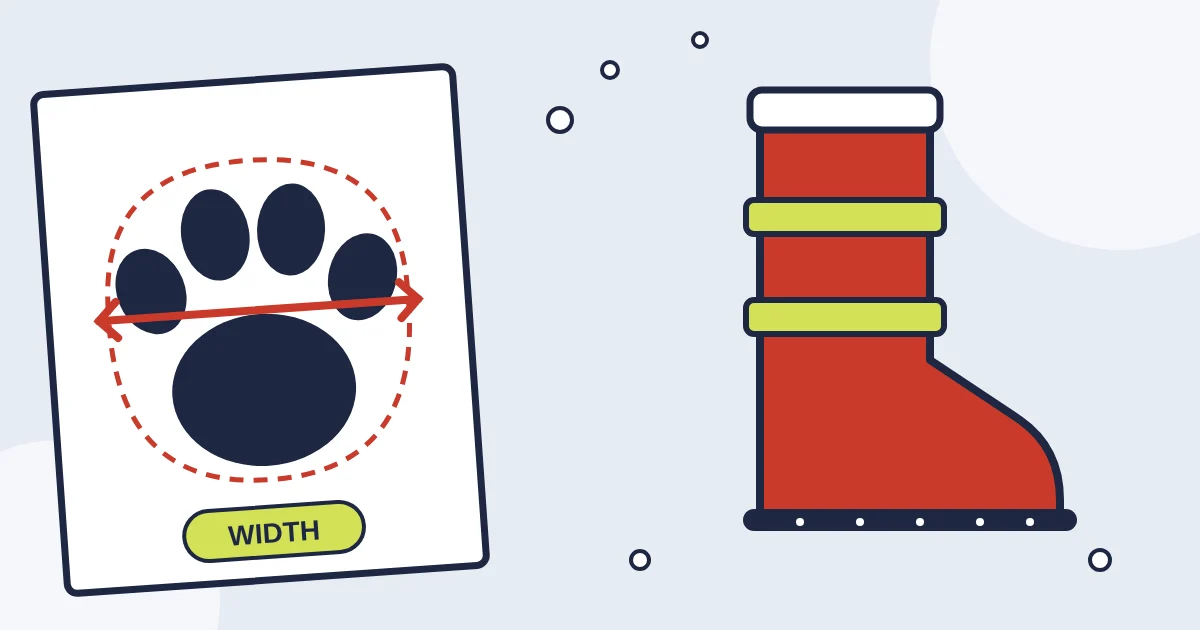
Short answer: boots are worth it if your dog walks on salted sidewalks, ice-melt or hard ice; for short walks on clear ground, wiping the paws when you get home may be enough. Size boots by paw width, not weight: trace a front paw with your dog standing on it and measure the widest part. Then pick the boot whose width is equal to or just above that number. On Amazon, fit is the most-discussed problem for every best-selling boot we checked, ahead of warmth or durability.
A note from Helen: Teya, our small Pomeranian, is the dog I had in mind when I checked the smallest sizes in this guide. This isn’t a test of boots on Teya. The advice on when boots help comes from the AVMA and the AKC, the measurements from each brand’s size chart on Amazon, and the complaints from Amazon’s review summaries, checked October 23, 2026.
Does your dog need boots in winter?
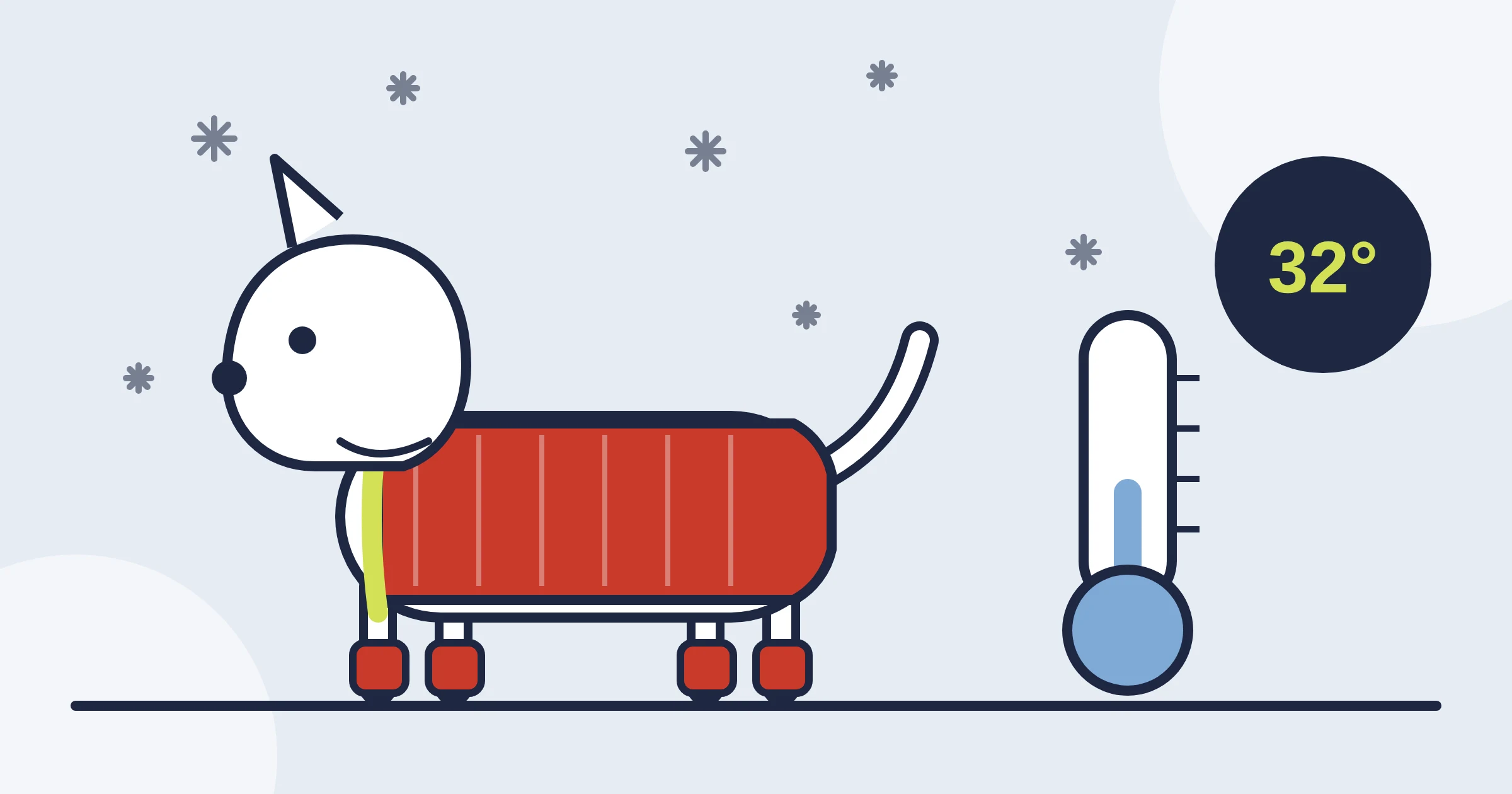
Not every dog, and not every walk. The American Veterinary Medical Association’s cold-weather advice is short: consider booties, and “make sure they fit!” Its other paw rule matters just as much: wipe or wash your dog’s feet, legs and belly after walks to remove packed snow, ice, salt and de-icing chemicals. The AKC adds that boots shield paws from de-icers and road salt, and that insulated boots help in real cold, since dogs can get frostbite once temperatures drop below freezing.
| Your walks | Boots? | Why |
|---|---|---|
| Salted sidewalks or parking lots | Yes, or paw wax plus a wipe-down | Salt and ice-melt get packed between the pads and toes; the AVMA says to wash them off after walks |
| Ice and hard-packed snow | Yes, with a grippy rubber sole | A sole with traction helps on slick surfaces; check that your dog can walk normally in it |
| Deep or wet snow | Helpful for long-haired feet | One snow-boot owner says they stopped little snowballs forming on the paws |
| Very cold days | Yes, plus a shorter walk | The AKC notes frostbite risk below 32°F. See how cold is too cold to walk a dog |
| Short walks on clear, unsalted ground | Usually not | Check the paws and wipe them when you get in |
| Hot pavement in summer | Yes, the same boots work | The AKC’s test: if you wouldn’t walk on it barefoot, your dog shouldn’t either |
Small and short-legged dogs often need help first, because their paws and bellies sit close to the slush. If your dog also shivers on winter walks, a coat comes before boots: our dog coat size guide has a calculator for that.
Boots, paw wax or nothing?
| Boots | Paw wax | Nothing, then wipe | |
|---|---|---|---|
| Salt and ice-melt | Best barrier | A thin layer between pad and ground | Washed off after the walk |
| Grip on ice | Depends on the sole | Some owners say it helps | Bare pads |
| Hassle | Sizing, training, straps | Rub on before each walk | None |
| Main complaint | Fit: they slip or twist off | It wears off; some dogs lick it | Doesn’t protect during the walk |
| Best for | City dogs on salt, long walks, ice | Dogs that refuse boots | Short walks on clear ground |
How to measure your dog’s paws for boots
- Put a sheet of paper on a hard floor and have your dog stand with one front paw on it. The AKC’s method is to press the paw onto the paper, because a paw spreads when a dog puts weight on it, the way it does when walking.
- Trace around the paw with a pen held upright. Include the toes, not the nails.
- Draw a line across the widest part of the outline and measure it. That number, in inches, is what boot charts call width.
- Repeat for the other front paw and one back paw. Ruffwear sells its boots in pairs because, it says, dogs often have wider front paws than rear paws. Use the wider front paw for four-boot sets.
- Note the length too (heel pad to the tip of the longest nail). One QUMY owner whose dog measured right for size 7 found the toes wearing through where the claws pressed, and went up a size. If the nails are long, trim them before you measure, or allow for them.
Don’t size by weight alone. QUMY’s listing says paw width is the key and weight is only “an additional reference”. Two dogs of the same weight can have very different feet.
Dog boot size calculator
Which size in each boot?
Enter the width of your dog’s front paw, and the back paw if you measured it. The calculator picks the smallest size that is at least as wide as the paw in each of our three boot picks. Nothing you type leaves your browser.
Widths come from each boot’s size chart on its Amazon listing, checked October 23, 2026. XSY&G says its sizes are measured by hand and allows a small error, so if your dog is right on the line between two sizes, check the reviews for that size or go up.
Size charts side by side
The same size number means a different boot in each brand. A QUMY size 5 is 2.4 inches wide; an XSY&G size 5 is about 2.36. Ruffwear skips numbers and names each size by its width.
| Size | QUMY width | QUMY weight guide | XSY&G width | XSY&G weight guide |
|---|---|---|---|---|
| 1 | 1.8 in | 11–23 lb | 1.6 in | 10–23 lb |
| 2 | 1.9 in | 18–27 lb | 1.7 in | 18–27 lb |
| 3 | 2.0 in | 23–33 lb | 1.9 in | 23–33 lb |
| 4 | 2.2 in | 31–40 lb | 2.1 in | 31–40 lb |
| 5 | 2.4 in | 40–55 lb | 2.36 in | 41–60 lb |
| 6 | 2.6 in | 52–65 lb | 2.5 in | 52–70 lb |
| 7 | 2.8 in | 63–75 lb | 2.7 in | 66–90 lb |
| 8 | 3.0 in | 74–88 lb | 2.9 in | 75–95 lb |
Ruffwear Grip Trex comes in eight widths: 1.50, 1.75, 2.00, 2.25, 2.50, 2.75, 3.00 and 3.25 inches, sold as a pair. PawZ rubber boots, a popular disposable style we didn’t pick, run from Tiny (under 1 in) and XXS (1–1.5 in) up to XL (4 in and over), and the listing itself suggests going one size up because they run small.
Toy breeds: the smallest QUMY is 1.8 inches wide, too big for many small paws. For tiny feet, look at Ruffwear’s 1.50 or XSY&G’s 1.6.
Why boots fall off, and the fixes
- Measured sitting, not standing. A paw without weight on it is narrower, so you end up a size too big. Measure again with your dog standing on the paper.
- Straps too loose. XSY&G’s own instructions say to tighten the straps once the boot is on, which “can effectively prevent the shoes from falling off”. Snug enough that the boot doesn’t spin, loose enough that you can slide a finger under the strap: that is our rule of thumb, not the maker’s.
- One size on four different paws. QUMY and XSY&G come as four identical boots. If the back paws are narrower, those boots slip first. Tighten the rear straps more, or use Ruffwear pairs in two sizes.
- Running and zoomies. Ruffwear owners are split: some say the boots stay on better than any they tried, others that they come off within seconds of running. Fit them on a walk first, then try a run.
- Rubbing. A Ruffwear owner recommends wearing boot socks under them to stop abrasion, and another mentions the boots sitting oddly over the dewclaws. Check the skin after the first few walks.
What owners complain about
I looked at Amazon’s review summaries for five popular boots and one paw wax on October 23, 2026. Amazon counts how many reviews mention a topic and whether each is positive or negative.
| Product | Fit | Other complaints |
|---|---|---|
| QUMY (our pick) | 1,360 of 3,755 fit mentions negative (36%) | Size: 438 of 702 negative |
| XSY&G (our pick) | 747 of 2,593 negative (29%), the best of the big sellers | Durability: 238 of 779 negative |
| Ruffwear Grip Trex (our pick) | 142 of 280 negative (51%) | Value: 69 of 112 negative, mostly because a pair is only 2 boots |
| PawZ rubber boots (not picked) | 1,396 of 2,526 negative (55%) | Ease of use: 1,286 of 1,789 negative (hard to get on); durability 761 of 1,275 negative |
| Spark Paws winter boots (not picked) | 47 of 108 negative | Owners say they don’t stay on running dogs |
| Musher’s Secret wax (our pick) | – | Removability: 268 of 853 negative; some say it doesn’t stay on the paws |
The pattern: owners agree boots protect (QUMY: 597 of 641 protection mentions positive; XSY&G: 542 of 552). The arguments are about fit and staying on. That is why we chose by the size chart, the straps and the fit record before anything else.
Boots and wax worth buying
Affiliate note: some links in this guide go to Amazon. As an Amazon Associate we earn from qualifying purchases, at no extra cost to you. We choose products for fit, safety and specifications, not for the commission.
Salt trucks come out with the first snow. Measure your dog this week and add the right size to your cart, so the boots are already broken in when you need them.
How I chose
- I only picked boots whose listings give a width for every size, so you can size by measurement.
- I weighed Amazon’s review summaries for fit and staying on more than star ratings, because nearly every boot protects when it stays on.
- I looked for two adjustable straps or a strap plus a wide opening, and a rubber sole.
- I checked every listing on October 23, 2026 for stock and U.S. delivery. Picks are based on specifications and owner feedback, not on tests with Teya.
Best for most dogs: QUMY Dog Shoes
The best-selling dog boot on Amazon (#1 in Dog Boots, more than 36,000 ratings) and one of the few with a full width chart in the listing: eight sizes from 1.8 to 3.0 inches wide. Each set has four boots with a rugged non-slip sole, a split opening that spreads wide to get the paw in, and two adjustable reflective straps.
- Owners say they protect against salt, ice and hot pavement: 597 of 641 protection mentions positive.
- Comes with instructions for getting your dog used to boots.
- Many colors in every size.
- Fit: 1,360 of 3,755 mentions negative, mostly boots that slip off or feel wrong to the dog.
- Size: 438 of 702 negative. Measure the paw; don’t go by the weight guide.
- Long nails can wear through the toe if the boot is a close fit.
Skip it if your dog’s paw is narrower than 1.8 inches; choose Ruffwear or XSY&G.
Check it on AmazonBest fit record: XSY&G Dog Shoes
A similar four-boot design with a thick non-slip sole and two long reflective straps, in eight sizes from about 1.6 to 2.9 inches wide. With more than 15,000 ratings, it has the best fit score of the big sellers we checked: 1,846 of 2,593 fit mentions are positive. Owners mention it working for German Shepherds, an 85 lb Shepadoodle and senior dogs.
- Smallest size is narrower than QUMY’s, better for small dogs.
- Protection: 542 of 552 mentions positive.
- Owners say they fit well and are easy to put on.
- Durability: 238 of 779 mentions negative; one owner’s pair showed toe and sole wear after about three years.
- Sizes are measured by hand, with a small error the listing warns about.
- One owner returned a pair for a strong fabric-softener smell.
Skip it if your dog runs hard on rough ground every day; Ruffwear’s Vibram sole is tougher.
Check it on AmazonMix front and back sizes: Ruffwear Grip Trex
A trail boot with a Vibram outsole, a ripstop upper that blocks snow, salt and moisture, and an ankle strap. Sizes are named by width, from 1.50 to 3.25 inches, and boots are sold in pairs so you can buy one size for the front and another for the back. It’s the boot we also picked in our cold-weather walking guide.
- The only pick you can size separately for front and back paws.
- Quality: 251 of 281 mentions positive; owners say they outlast pet-store boots.
- Smallest size, 1.50 in, fits many small dogs.
- Fit: 142 of 280 mentions negative. Some dogs keep them on, others lose them while running.
- Value: you need two pairs for four paws, so it costs more than a four-boot set.
- Some dogs refuse to walk in them at first.
Skip it if you want one box that covers all four paws.
Check it on AmazonFor dogs that refuse boots: Musher’s Secret Paw Wax
An all-natural wax you rub into the pads before a walk. It has more than 52,000 ratings and is one of the most-bought paw protectors on Amazon. Owners say it works on ice and snow days (748 of 793 winter-protection mentions positive) and keeps pads soft.
- No sizing and no training.
- Owners say it moisturizes dry pads well (1,082 of 1,134 mentions positive).
- It wears off: 268 of 853 removability mentions negative.
- Some dogs lick it off.
- It’s a thin layer, not a barrier: still wipe paws after salted walks.
Getting your dog used to boots
The AKC suggests a test run indoors before you head out: check that the paws stay in, that the soles grip and that the boot follows the shape of the paw. Here is how I would build up to it:
- Day 1: one boot on a front paw for a minute, with treats. Take it off before your dog tries to.
- Days 2–3: all four boots indoors for 5 minutes. Most dogs high-step at first; that is normal.
- Days 4–5: a short walk on a quiet street. Check the skin above the boot when you get back.
- After that: full walks. Re-tighten the straps after the first few minutes, when the boot settles.
Fit checklist
Dog boot fit checklist
Frequently asked questions
Do dogs really need boots in winter?
Not always. The AVMA suggests considering booties, as long as they fit, and wiping your dog’s feet, legs and belly after walks to remove snow, salt and de-icing chemicals. Boots help most on salted sidewalks, ice and long walks in real cold; for short walks on clear ground, a wipe-down is often enough.
How do I measure my dog’s paw for boots?
Put a sheet of paper on a hard floor, have your dog stand with a front paw on it so the paw spreads, trace around it and measure straight across the widest part. Do both front paws and a back paw. Choose the boot whose width is equal to or just above the front paw width.
How should dog boots fit?
Snug enough that the boot doesn’t twist or slide when your dog walks, with room at the toe for the nails, and straps tightened after the boot is on. Try them indoors first: the AKC suggests a test run to check the paws stay in and the soles grip.
Why do my dog’s boots keep falling off?
Usually the boots are a size too big (often from measuring a paw without weight on it), the straps are loose, or the back paws are narrower than the front ones. Measure again standing, tighten the straps once the boot is on, and consider boots sold in pairs so the back paws can wear a smaller size.
Is paw wax as good as boots?
It is a good option for dogs that refuse boots. A wax like Musher’s Secret puts a thin layer between the pads and the ground, but it wears off during the walk and some dogs lick it. Wipe the paws after salted walks either way.
What size boots for a 50 lb dog?
Weight is only a rough guide. QUMY’s chart puts 40 to 55 lb dogs in size 5 (2.4 inches wide), but the brand itself says paw width is the key. Measure the paw and use the calculator above.
Paws & Picks is a participant in the Amazon Services LLC Associates Program. As an Amazon Associate we earn from qualifying purchases. Product details can change; check the current listing before you buy.
Sources
- American Veterinary Medical Association: Cold weather safety tips
- American Kennel Club: Best dog boots, and how to measure your dog’s paws
- Amazon product listings, size charts and review summaries for the boots and wax above, checked October 23, 2026.