 By
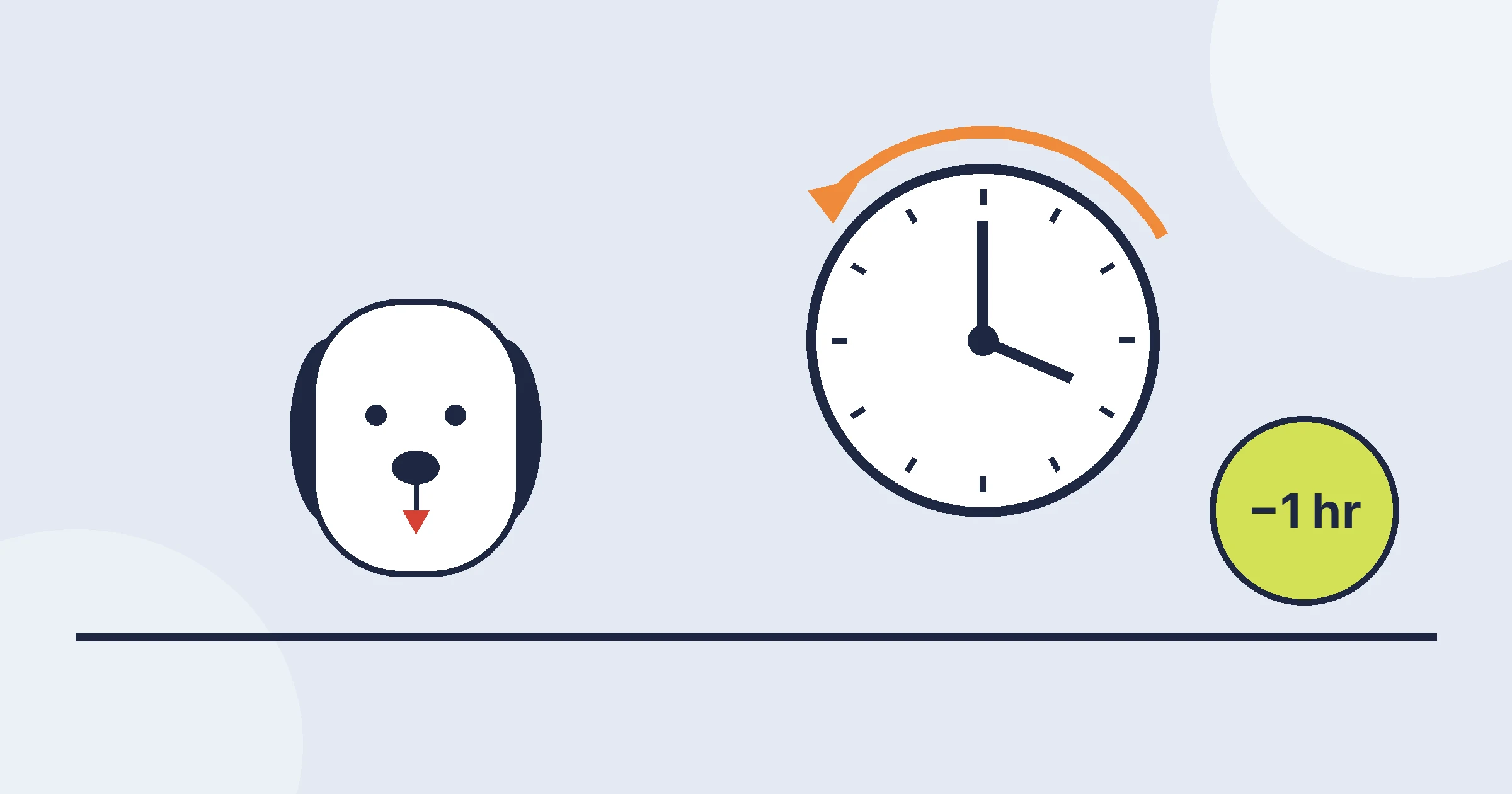
Short answer: starting Wednesday, October 28, move breakfast, dinner and walks 15 minutes later each day. By Sunday, November 1, your pet is on the new clock with no hungry 5 a.m. wake-up. If your pet takes timed medication such as insulin, ask your vet how to shift it before you change anything.
Why the time change bothers pets
Dogs and cats do not read clocks, but they are very good at routine. Their hunger, bathroom breaks and energy follow the times they are usually fed and walked, and the sunrise. When the clocks fall back, 7 a.m. breakfast suddenly arrives at what your pet’s body thinks is 8 a.m. The result is a dog pacing at the door or a cat on your chest an hour before the alarm.
Most pets adjust within a week anyway. Shifting gradually just makes that week easier for everyone, especially for older pets, puppies and pets on medication.
The 4-day plan
Falling back means your pet’s routine needs to move later by the clock. Example for a pet fed at 7 a.m. and 6 p.m.:
| Day | Breakfast | Dinner | Walks |
|---|---|---|---|
| Wed, Oct 28 | 7:15 a.m. | 6:15 p.m. | 15 minutes later |
| Thu, Oct 29 | 7:30 a.m. | 6:30 p.m. | 30 minutes later |
| Fri, Oct 30 | 7:45 a.m. | 6:45 p.m. | 45 minutes later |
| Sat, Oct 31 | 8:00 a.m. | 7:00 p.m. | 1 hour later |
| Sun, Nov 1 (new time) | 7:00 a.m. | 6:00 p.m. | Back to normal by the clock |
Saturday is Halloween, so keep the evening walk early and the dog away from the door once trick-or-treaters start. Our Halloween safety guide and chocolate calculator covers the rest of that night.
Missed the plan? Split the difference on Sunday: feed 30 minutes earlier than the new time for two or three days, then move to the normal time.
Cats and early wake-ups
- Do not reward the 5 a.m. alarm. If you get up and feed a cat who wakes you, you teach the cat that it works. Wait until your usual time, even if it takes a few noisy mornings.
- Play before bed. A 10-minute play session with a wand toy, then a small meal, helps many cats sleep longer.
- Use a timed feeder if you have one, and move its schedule 15 minutes a day with the plan above. Cats then link food to the machine, not to you.
- Keep the bedroom dark. Morning light is part of what wakes cats early; blackout curtains help after the change.
Medication and diabetic pets
Some medicines, especially insulin for diabetic dogs and cats, are given on a strict schedule tied to meals. Call your vet before shifting insulin or any timed medication. Many vets suggest moving the dose gradually along with meals, but the right plan depends on your pet and the drug. Never skip or double a dose to catch up.
Watch for: weakness, wobbliness, trembling or unusual sleepiness in a diabetic pet can mean low blood sugar. Call your vet or an emergency clinic right away.
Darker evening walks
After the change, many people walk their dogs after work in full darkness. Make your dog easy to see and hard to lose:
When it gets really cold, our guide to how cold is too cold to walk a dog has a temperature chart by dog size.
What helps
Affiliate note: some links in this guide go to Amazon. As an Amazon Associate we earn from qualifying purchases, at no extra cost to you.
Slow down the wait: LickiMat Classic Buddy
A textured mat you spread with a little wet food or plain pumpkin. It keeps a hungry dog or cat busy for 10 to 15 minutes while you shift breakfast later.
- Licking is calming for many pets.
- Dishwasher-safe.
- Downside: supervise strong chewers; it is a lick mat, not a chew toy.
For early risers: KONG Classic
Fill it with part of the dog’s breakfast the night before and freeze it. Hand it over at the old wake-up time to buy you a quiet half hour.
Check on AmazonDark walks: GoTags Stainless Steel ID Tag
Engraved with your phone number, so a dog that slips the leash in the dark can come home fast.
Check on AmazonFrequently asked questions
When does daylight saving time end in 2026?
On Sunday, November 1, 2026, at 2 a.m., when clocks in most of the U.S. move back one hour. Hawaii and most of Arizona do not change.
Do dogs and cats notice the time change?
Yes. Their routines follow meal and walk times and daylight, so a sudden one-hour shift can mean early wake-ups, begging or bathroom accidents for a few days.
How long does it take a pet to adjust?
Most pets adjust within about a week. Shifting meals and walks by 15 minutes a day for four days makes the change almost unnoticeable.
Should I change my diabetic pet’s insulin time?
Ask your veterinarian first. Insulin is tied to meals, and the safe way to shift it depends on your pet and the medication.
My cat wakes me an hour early now. What do I do?
Do not feed or get up on demand. Play with your cat before bed, give a small meal, keep the room dark, and use a timed feeder if you have one. Most cats adapt in a week or two.