 By
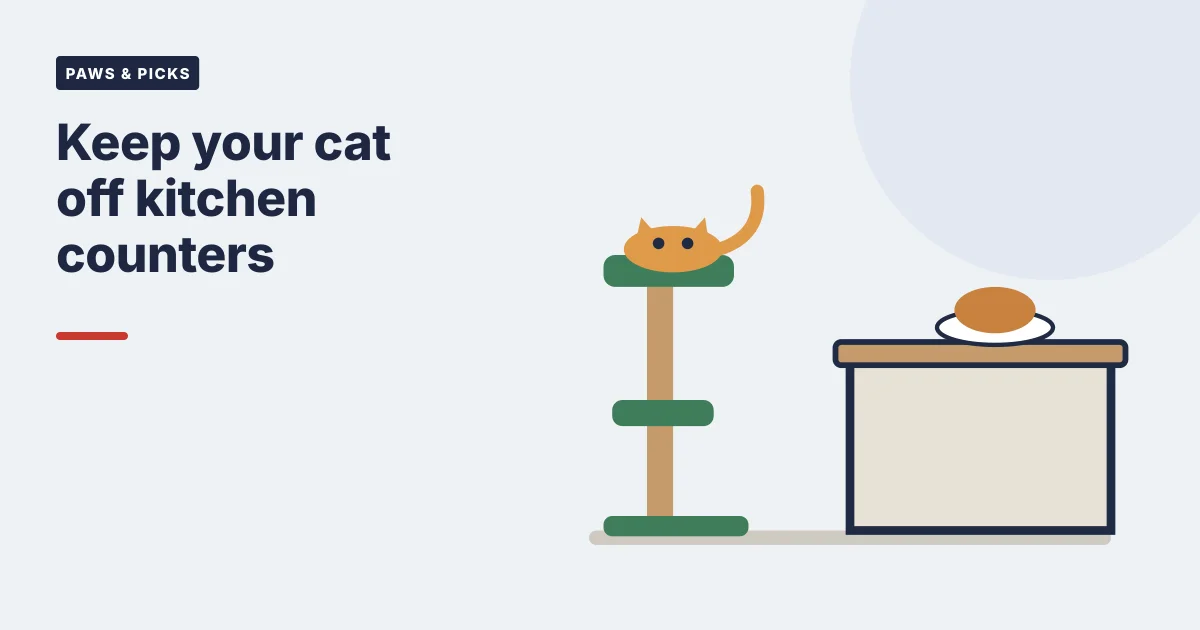
Short answer: Give your cat a better high spot near the kitchen, like a cat tree or window perch, and reward it there. Make counters boring and unrewarding: no food left out, wipe crumbs, and calmly lift your cat down every time. A temporary deterrent such as double-sided tape or a placemat flipped upside down helps while it learns. Never punish with spray bottles or yelling; it makes cats fearful, not trained. During holiday cooking, keep your cat out of the kitchen entirely: hot stoves, raw dough and turkey bones are real dangers.
Affiliate note: some links in this guide go to Amazon. As an Amazon Associate, Paws & Picks earns from qualifying purchases. It never changes what I recommend.
Cats like to be high up where they can watch the room, and the kitchen counter is high, close to people and sometimes rewards them with a bit of butter.
The aim isn't to win every battle; it's to make the counter the least interesting high place in the house. Related: cat trees for large cats and a bored indoor cat in winter.
Why cats love counters
- Height: a safe place to watch everything.
- Food and smells, sometimes a reward.
- Warmth near the stove or dishwasher.
- Your attention, even when it's you saying "down."
The plan (start this week)
- Put a cat tree, shelf or stool at counter height near the kitchen, with a view.
- Reward your cat with treats and praise every time it uses that spot.
- Clear the counters: no food left out, wipe crumbs, put away butter.
- Each time your cat jumps up, calmly lift it down to its spot, no drama.
- Add daily play before you cook so it's tired and less curious.
- Be consistent: everyone in the house follows the same rules.
Safe deterrents
- Double-sided tape or sticky mats made for pets on the counter edges, for a few weeks.
- Upside-down vinyl carpet runner or placemats with the nubby side up.
- Baking sheets along the edge: the noise of landing on them is surprising but harmless.
- Remove each deterrent gradually once the habit fades.
What not to do
- No spray bottles, shouting or shaking cans: they teach fear of you, not the counter rule.
- No motion-activated air cans in a kitchen where food is prepared.
- Don't feed your cat from the counter, ever.
Holiday kitchen dangers
- Hot stovetops and pans.
- Raw yeast dough, onions, garlic, chives and grapes or raisins.
- Turkey bones, string from the roast, foil and plastic wrap.
- During the big cooking days, close your cat in a quiet room. See a safe room for holiday guests.
Picks
Picks are based on design and owner reviews.
Cat tree with a top perch at counter height
Gives your cat a legal high place to watch the kitchen.
- Cheap ones wobble.
- Takes floor space.
Who should skip it: Skip it if you have shelves you can make into a cat path.
See options on AmazonSticky Paws or double-sided pet tape
Cats dislike the sticky feel on their paws; harmless and easy to remove.
- Collects dust and hair; replace often.
Who should skip it: Skip it on delicate finishes; test a small spot first.
See options on AmazonWand toy with feathers
Ten minutes of play before you cook makes counter patrol less tempting.
- Feathers fall off.
Who should skip it: Skip it if your cat chews string; put it away after.
See options on AmazonShopping for Black Friday? Add your pick to your Amazon cart now, so you can check the price again on November 27 and buy when it drops. Price ranges here are typical recent prices, not quotes.
Frequently asked questions
How do I stop my cat from jumping on the counter?
Give it a better high spot nearby, reward it there, keep food off the counters, lift it down calmly every time and use a temporary sticky deterrent.
Do spray bottles work to keep cats off counters?
Not well. They can make your cat afraid of you, and many cats just jump up when you're not there.
Is it unsafe for cats to be on kitchen counters?
It can be: hot stoves, sharp knives, toxic foods like onions and raisins, and bones are all risks, especially during holiday cooking.
How long does it take to keep a cat off the counter?
Usually a few weeks of consistent rewards and deterrents. Older habits can take longer.