 By
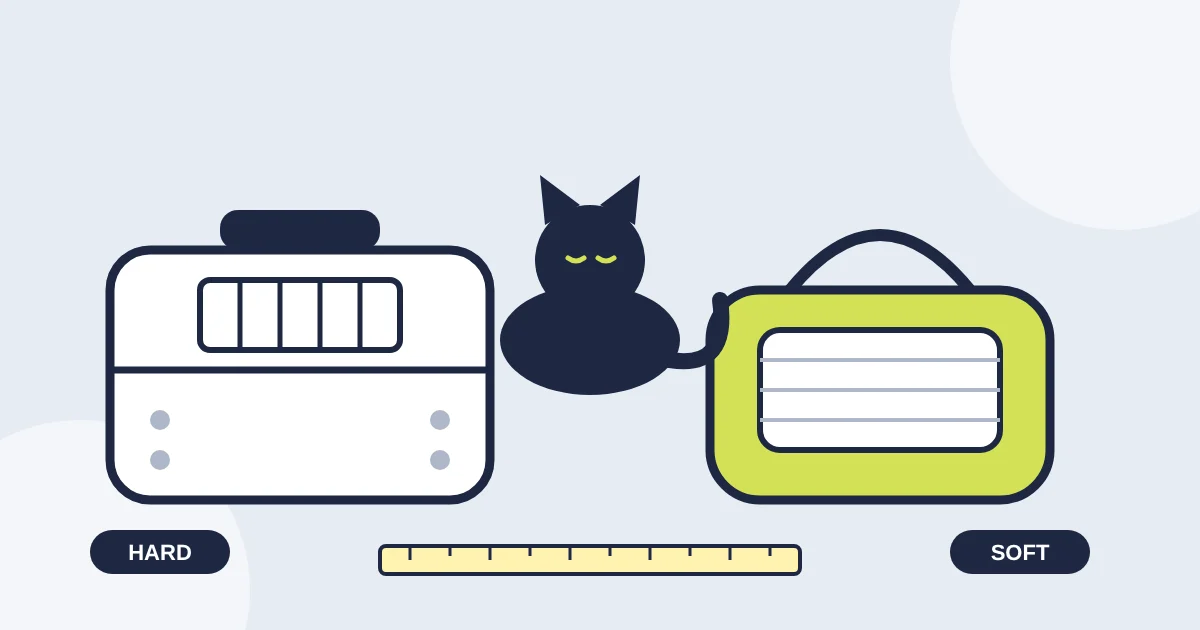
Short answer: for a big cat, use a hard carrier that opens from the top and front for vet visits and car trips. The American Association of Feline Practitioners (AAFP) recommends exactly that, ideally one whose top half comes off so the vet can examine your cat in the bottom half. A soft carrier is for flying in the cabin, where it has to squeeze under a seat, and for a cat who panics at the sight of the plastic box. Size it from your cat, not the label: inside, a carrier should be at least your cat’s length plus half its leg height, and tall enough to stand. For the car, only crash-tested carriers have been tested in a crash; among our picks, that’s the Sleepypod Air.
A note from Helen: Tim is a big black cat, and Teya, our small Pomeranian, flies in a carrier when we travel, so carrier size is a real question in our house. This guide isn’t a test of carriers on Tim. The vet-visit advice comes from the AAFP’s cat-to-vet guidance, crash ratings from the Center for Pet Safety and Sleepypod, airline limits from the airlines’ pet policies, and sizes and complaints from Amazon listings and their review summaries, checked October 26, 2026.
Hard vs soft: the verdict by trip
| Trip | Choose | Why |
|---|---|---|
| Vet visits | Hard, top-opening, removable top | The vet can examine your cat in the bottom half instead of tipping or pulling it out (AAFP) |
| Car trips | Hard and belted in, or a crash-tested soft carrier | A hard shell keeps its shape; only crash-tested carriers have been tested in a collision |
| Flying in the cabin | Soft, airline-sized | It must fit under the seat in front; a soft bag can compress a little |
| Flying in the hold | Hard, airline cargo kennel | Airlines require rigid kennels for cargo |
| A cat that fights the carrier | Hard with a top door, or a soft one with a wide top opening | Lowering a cat in from above is far easier than pushing it through a front door |
| Long road trips, 20 lb+ cats | An extra-large soft crate | Room to lie stretched out, plus space for a small litter tray at stops |
Hard vs soft, side by side
| Hard carrier | Soft carrier | |
|---|---|---|
| Vet exams | Best: many split in half | Possible if it opens fully on top |
| Cleaning after accidents | Wipe or hose down | Washable liner, but the bag itself soaks things up |
| Weight to carry | About 4–6 lb empty | About 2–5 lb empty |
| Under an airplane seat | Rarely fits; most are too tall | Made for it |
| Storage | Bulky (some fold flat) | Folds or squashes |
| Escape risk | Metal doors and latches; check them | Zippers are the weak point |
| Main complaint | “Too small for a big cat”, fiddly halves | Straps, mesh and zippers wearing out |
One more rule from the AAFP: avoid carriers you have to pull or dump your cat out of. A frightened big cat braced against the back of a front-door-only carrier is the scene every vet wants to avoid.
How big a carrier your cat needs
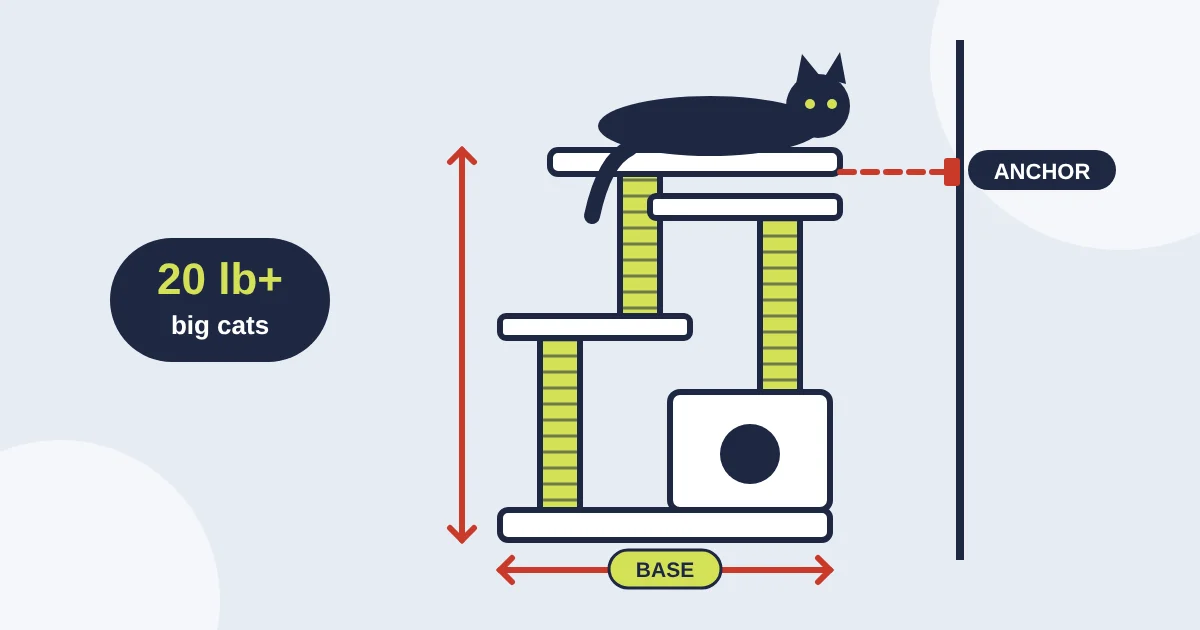
The weight on a carrier label tells you how much the bottom and handle can hold, not whether your cat fits. A long, lanky 14 lb cat can need more room than a round 17 lb one. Measure your cat standing:
- A: nose to the base of the tail.
- B: floor to the elbow (the joint behind the front leg).
- D: floor to the top of the head (or ear tips, if they stand up).
Airlines use the same idea for pet kennels: inside length at least A + ½ B, inside height at least D, and enough width to turn around. For a cat at home, that’s a good minimum for the car and the vet too. For a flight in the cabin, you can’t get that much room under a seat, and your cat will lie down for the flight, which is normal.
Carrier size calculator
Which carrier fits your cat?
Enter your cat’s measurements in inches and its weight in pounds, and choose the trip. The tool works out the inside size you need and checks it against the carriers in this guide. Nothing you type leaves your browser.
The default numbers are an example of a large cat, not Tim’s measurements. Carrier sizes are the outside dimensions from each Amazon listing; we subtract about an inch for the inside.
Flying with a big cat
This is where big cats run into trouble, because airline limits are written for small pets.
- US airlines: Delta and United don’t set a weight limit for cabin pets, but the carrier must fit under the seat: United lists 18 × 11 × 11 inches for soft carriers, and Delta recommends soft carriers up to about the same size. American is stricter on international trips. A big cat can fly, but it will be lying down.
- European airlines: Air France, KLM and Lufthansa allow 8 kg (17.6 lb) including the bag. A 15 lb cat in a 4 lb carrier is already over. Heavier cats travel in the hold, in a rigid kennel.
- The UK accepts pets arriving by air only as cargo on approved routes.
Flying to Europe? Pets also need a microchip, a rabies vaccination and an EU health certificate; check the EU’s official travelling with pets page before you book.
Car safety: belt it in
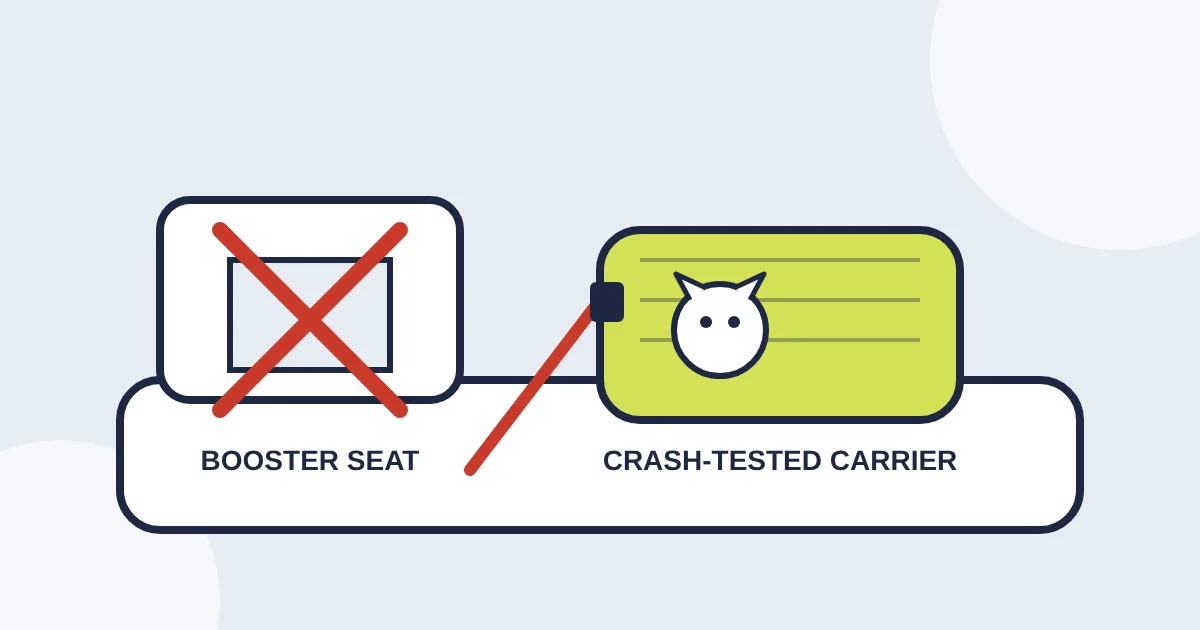
A loose carrier becomes a projectile in a hard stop. The AAFP says to seat-belt the carrier in. Either run the seat belt through the handle or the belt loops on a soft carrier, or wedge a hard carrier on the floor behind the front passenger seat, where it can’t slide. Never put a carrier on a front seat with an airbag.
Very few carriers have been crash-tested. In 2025, the Center for Pet Safety tested Sleepypod’s carriers to its updated standard, which follows the latest U.S. child car seat rules, and Sleepypod says the Air is rated for pets up to 18 lb. Most other carriers, hard or soft, have simply never been tested. If you drive a lot with your cat, that’s worth paying for. Our small dog car seat vs carrier vs harness guide explains the crash testing in more detail.
What owners complain about
I compared Amazon’s review summaries for seven popular carriers for large cats on October 26, 2026. Amazon counts how many reviews mention a topic and whether each mention is positive or negative.
| Carrier | Biggest complaint | Verdict |
|---|---|---|
| Petmate Two Door, 24 in (hard) | Size: 456 of 1,352 mentions negative, often “too small for a larger cat” | Pick, for cats up to about 15 lb |
| Amazon Basics 2-Door Top-Load (hard) | Ease of use: 421 of 1,110 negative, mostly the latches and the screws joining the halves | Pick, for 12–20 lb cats |
| Sherpa Original Deluxe, Large (soft) | Durability: 159 of 340 negative, straps and mesh | Pick, for the cabin |
| Sleepypod Air (soft) | Zipper: 39 of 78 negative; value: 49 of 125 | Pick, crash-tested |
| PetMasion XL soft crate | Few complaints; assembly 11 of 57 negative | Pick, for long car trips |
| Henkelion Large soft carrier | Durability: 369 negative vs 271 positive. The listing also says not to put it under an airplane seat, while tagging it “airline approved” | Skipped |
| GAPZER large soft carrier | Zippers: 262 of 375 negative; durability: 254 of 356 negative | Skipped |
The pattern is clear: hard carriers get “too small” complaints from big-cat owners who trusted the weight on the label, and soft carriers get “it fell apart” complaints about zippers, straps and mesh. A big, strong cat finds weak zippers fast.
Carriers that fit big cats
Affiliate note: some links in this guide go to Amazon. As an Amazon Associate we earn from qualifying purchases, at no extra cost to you. We choose products for fit, safety and specifications, not for the commission.
Traveling for Thanksgiving or the holidays? Give your cat a couple of weeks to get used to a new carrier at home. If you’re waiting for Black Friday, add it to your Amazon cart now so it’s easy to find when deals start.
How I chose
- I started from the AAFP’s advice for vet visits: hard, top and front opening, top half removable.
- I compared listed outside sizes against the room a large cat needs to stand and turn, and dropped carriers whose owners mostly complain about durability.
- For flying, I only picked soft carriers sized for under-seat spaces, and for the car I note which ones are crash-tested.
- I checked every listing on October 26, 2026 for stock and U.S. delivery. Picks are based on specifications and owner feedback, not on tests with Tim.
Best hard carrier for a big cat: Amazon Basics 2-Door Top-Load
A plastic carrier with a steel-wire front door and a top door that swings open to the left or right, listed for cats or dogs of 12 to 20 pounds. The two halves are held together with screws, so you can take the top off for a vet exam or a deep clean. Spring latches open with one hand, and there are vents on the sides, top and back.
- Spacious: 307 of 326 mentions positive, with room for an adult cat to lie down.
- Sturdiness: 1,111 of 1,378 mentions positive.
- Ease of use is mixed: 421 of 1,110 mentions negative, mostly stiff latches and the screws between the halves.
- Quality: 338 of 2,669 negative.
Skip it if you need to fly in the cabin; at 13 inches tall it won’t fit under a seat.
Check it on AmazonRoomiest top-loader: Petmate Two Door Top Load, 24 inch
A classic vet-visit carrier with a front door and a top door, and halves that come apart without tools. It’s the biggest of our hard picks inside, but Petmate lists it for pets up to 15 pounds, so it suits a long, lean big cat better than a heavy one. A stay-dry moat in the floor keeps accidents away from your cat.
- Two doors: 632 of 678 mentions positive; owners say the top door helps most with cats.
- Assembly: 1,169 of 1,273 positive, easy to take apart for cleaning.
- Size: 456 of 1,352 mentions negative, often that it’s too small for a larger cat. Use the calculator above.
- Top opening: 111 of 684 negative, mostly that it’s smaller than expected.
Skip it if your cat is over about 15 lb and stocky; choose the Amazon Basics carrier.
Check it on AmazonFlying in the cabin: Sherpa Original Deluxe, Large
The soft carrier airlines have seen thousands of times. A spring-wire frame lets you push the back end down a few inches to fit under a seat, it opens from the top and the side, the zippers lock, and a luggage strap doubles as a seat-belt pass-through in the car. Sherpa lists the Large for pets up to 22 pounds, but at 11.5 inches tall a big cat will be lying down.
- Fits under the seat: 537 of 641 fit mentions positive.
- Travel: 398 of 416 mentions positive, especially for flights.
- Durability is mixed: 159 of 340 mentions negative, about straps and mesh.
- Size: 207 of 644 negative, that it’s too small.
Skip it if you’re flying a European airline with a cat over about 14 lb: cat plus bag must stay under 8 kg.
Check it on AmazonCrash-tested: Sleepypod Air
A soft carrier that does both jobs: its ends squash from 22 to 16 inches to fit under an airplane seat, and in the car it has been crash-tested by the Center for Pet Safety. Sleepypod says it’s rated for pets up to 18 lb; the Amazon listing says 17.5 lb. It opens at the top and both ends, and the bedding is machine washable.
- Quality: 309 of 340 mentions positive.
- Portability: 108 of 123 positive, easy through airports.
- Zipper: 39 of 78 mentions negative, stiff or getting stuck.
- Value: 49 of 125 negative; it costs more than most carriers.
- Size: 33 of 85 negative, better for longer, shorter pets than tall ones.
Skip it if your cat is over 18 lb.
Check it on AmazonLong car trips: PetMasion Extra Large Soft Crate
A collapsible crate with a metal frame and mesh on five sides, big enough for a very large cat to stretch out, or for two cats. Four seat-belt clips hold it in place, the zippers have safety clips, and it has a waterproof bottom liner. It isn’t made for flying or crash-tested, so think of it as a room on the back seat.
- Size: 151 of 168 mentions positive, roomy enough for big cats.
- Sturdiness: 111 of 116 positive.
- Few complaints so far; assembly is the main one (11 of 57 negative).
- It has far fewer reviews than our other picks.
Skip it if you need to carry it far: at 8 lb empty, plus a big cat, it’s heavy.
Check it on AmazonGetting a big cat into the carrier
Carrier training checklist
For a big cat who sleeps on warm spots, a small self-warming pad in the carrier can make it more inviting; our heated cat beds guide explains which kinds are safe.
Frequently asked questions
Is a hard or soft carrier better for a large cat?
For vet visits and car trips, a hard carrier with a top door and a removable top half, which is what the AAFP recommends. For flying in the cabin, a soft carrier, because it has to fit under the seat in front.
What size carrier does a 20 lb cat need?
Measure rather than go by weight. Inside, the carrier should be at least your cat's length from nose to base of tail plus half its elbow height, and as tall as your cat standing. For many 20 lb cats that means about 22 to 24 inches long and 13 inches or more tall.
Can a big cat fly in the cabin?
On many US airlines, yes, as long as the carrier fits under the seat; Delta and United have no weight limit. On Air France, KLM and Lufthansa, the cat and bag together must weigh no more than 8 kg (17.6 lb), so bigger cats fly in the hold.
Should a cat carrier be covered in the car?
Some cats are calmer when the carrier is covered with a towel, and others prefer to see out, according to the AAFP. Try both, and keep the vents clear.
Where should a cat carrier go in the car?
Belted into the back seat, or on the floor behind the front passenger seat where it can't slide. Never on a front seat with an airbag.
Are any cat carriers crash-tested?
Yes, a few. The Center for Pet Safety has crash-tested Sleepypod's carriers, including the Sleepypod Air, which Sleepypod says is rated for pets up to 18 lb. Most carriers have never been crash-tested.
Paws & Picks is a participant in the Amazon Services LLC Associates Program. As an Amazon Associate we earn from qualifying purchases. Product details can change; check the current listing before you buy.
Sources
- AAFP / Cat Friendly Homes: getting your cat to the veterinarian
- Sleepypod and Center for Pet Safety: carriers earn top safety ratings at new standard (February 18, 2025)
- Sleepypod Air: specifications and crash rating
- Your Europe: travelling with pets
- United Airlines, Delta, Air France, KLM and Lufthansa in-cabin pet policies, checked October 2026.
- Amazon product listings and review summaries for the carriers above, checked October 26, 2026.