 By
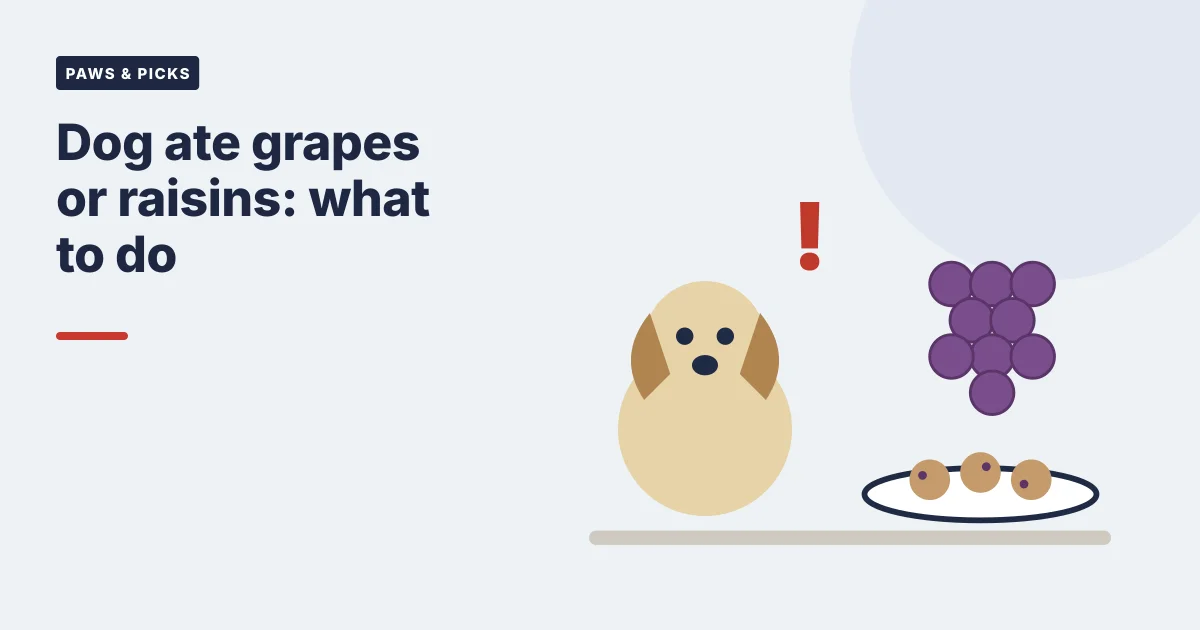
Short answer: Call your vet, an emergency vet or a pet poison line now, even if your dog seems fine and even for a small amount. Grapes, raisins, currants and sultanas can cause sudden kidney failure in some dogs, and there's no known safe amount. Your vet may make your dog vomit if it's been eaten recently and give IV fluids; don't induce vomiting at home unless they tell you to. Watch for vomiting, diarrhea, not eating, lethargy and peeing less.
Affiliate note: some links in this guide go to Amazon. As an Amazon Associate, Paws & Picks earns from qualifying purchases. It never changes what I recommend.
Researchers now believe tartaric acid in grapes is the likely cause, which may explain why some dogs get very sick from a few and others don't. Nobody can predict which dog will react, which is why vets treat every case seriously.
For other holiday dangers, see Thanksgiving foods for dogs and cats, dog ate a turkey bone and the dog ate chocolate calculator.
What to do in the first hour
- Take away anything left and note what was eaten, roughly how much and when.
- Call your vet or an emergency vet now. You can also call ASPCA Animal Poison Control at (888) 426-4435 or Pet Poison Helpline at (855) 764-7661; a fee may apply.
- Don't make your dog vomit at home unless the vet tells you to and how.
- Bring the packaging or recipe (fruitcake, stuffing, trail mix) to the vet.
Holiday foods that hide raisins
- Stuffing and dressing with raisins or currants
- Fruitcake, stollen, panettone and mince pies
- Oatmeal-raisin cookies, cinnamon raisin bread
- Trail mix, granola, salads with raisins
- Grape juice, and grapes on cheese boards
Why grapes are so risky
In some dogs, grapes and raisins cause acute kidney injury. Size, breed and age don't reliably predict which dogs react, and the effect doesn't track neatly with the amount eaten. That's why the safe answer is to treat any amount as an emergency.
Symptoms
- Vomiting, often within hours
- Diarrhea, not eating
- Lethargy, weakness, belly pain
- Drinking and peeing more at first, then peeing less or not at all
What the vet will do
If it's early, the vet may make your dog vomit, give activated charcoal and start IV fluids for a day or two, with blood tests to check the kidneys. Early treatment gives the best chance of protecting the kidneys.
Picks
Picks are based on safety design and owner reviews.
Pantry door or cabinet child locks
Keeps trail mix, raisins and baking supplies out of reach of clever dogs.
- Magnetic ones need a key nearby.
Who should skip it: Skip it if your pantry already has a door your dog can't open.
Check price on AmazonDog-safe holiday treats
Give guests something they can safely hand your dog instead of table food.
- Some are high in calories.
Who should skip it: Skip it if your dog has a sensitive stomach.
Check price on AmazonPressure-mounted pet gate
Stops counter-surfing while you bake and cook.
- Not for stairs.
Who should skip it: Skip it if your kitchen has a door.
Check price on AmazonShopping for Black Friday? Add your pick to your Amazon cart now, so you can check the price again on November 27 and buy when it drops. Price ranges here are typical recent prices, not quotes.
Frequently asked questions
How many grapes are toxic to a dog?
There is no known safe amount. Some dogs get kidney failure from a small number, so vets treat any amount as an emergency.
My dog ate one grape. Will it be okay?
Many dogs are fine, but some aren't, and no one can predict which. Call your vet or a pet poison line now.
Should I make my dog throw up after eating grapes?
Only if your vet tells you to and how. Don't use home methods without guidance.
Are raisins worse than grapes?
Raisins are concentrated, so a small handful can matter. Treat both as an emergency.